Why a price works better than a lock
BuckTime! is built on a few well-known ideas about how people make choices, and how children learn about money. Here's what they are, and how we used them.
Choice instead of control
Research on motivation finds that people stick with choices they feel are their own (psychologists call this self-determination theory). When a rule feels forced on us, we tend to push back against it, which is called reactance. A lock puts the choice with the parent. BuckTime! hands it to your child: the screen is always there, and so is the money.
43% of Canadian parents say too much screen time is the biggest cause of conflict at home.
MediaSmarts, 2018The money is already theirs
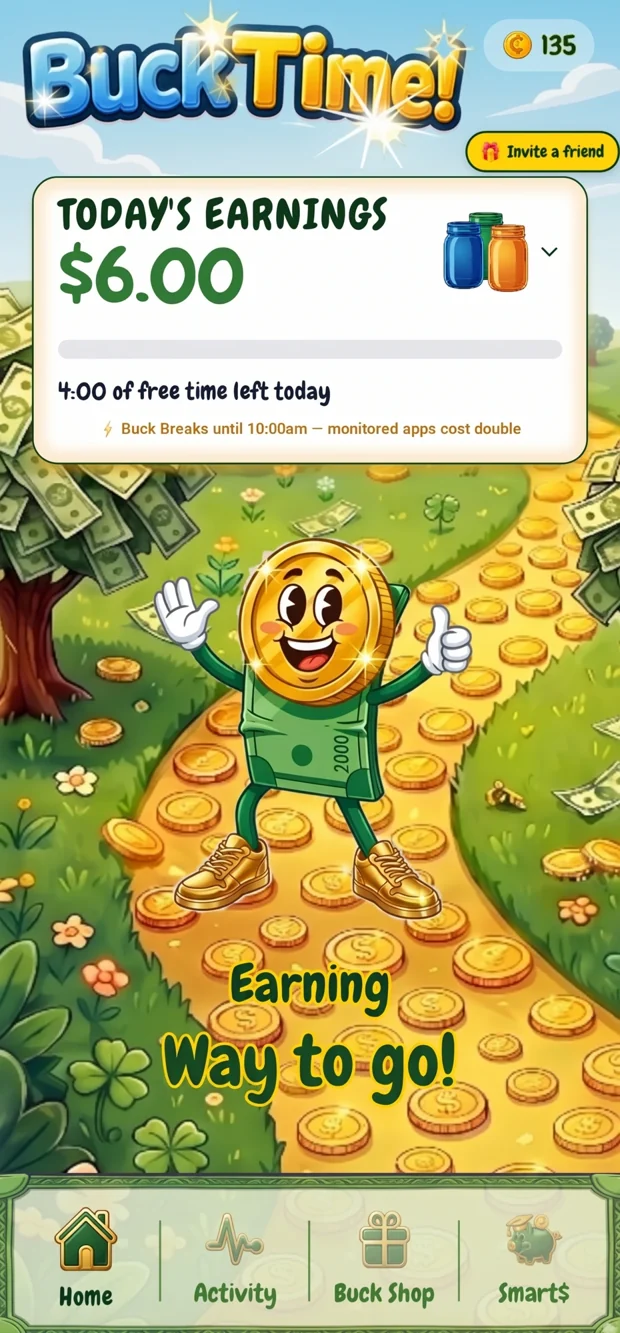
Each day starts with the allowance already in your child's account. Screen time spends it. That's deliberate: people generally feel losing something more than gaining the same amount (one of the best-known findings in behavioural economics, called loss aversion). Keeping money they already have is a stronger pull than earning money they don't have yet.
A clear price, not a wall
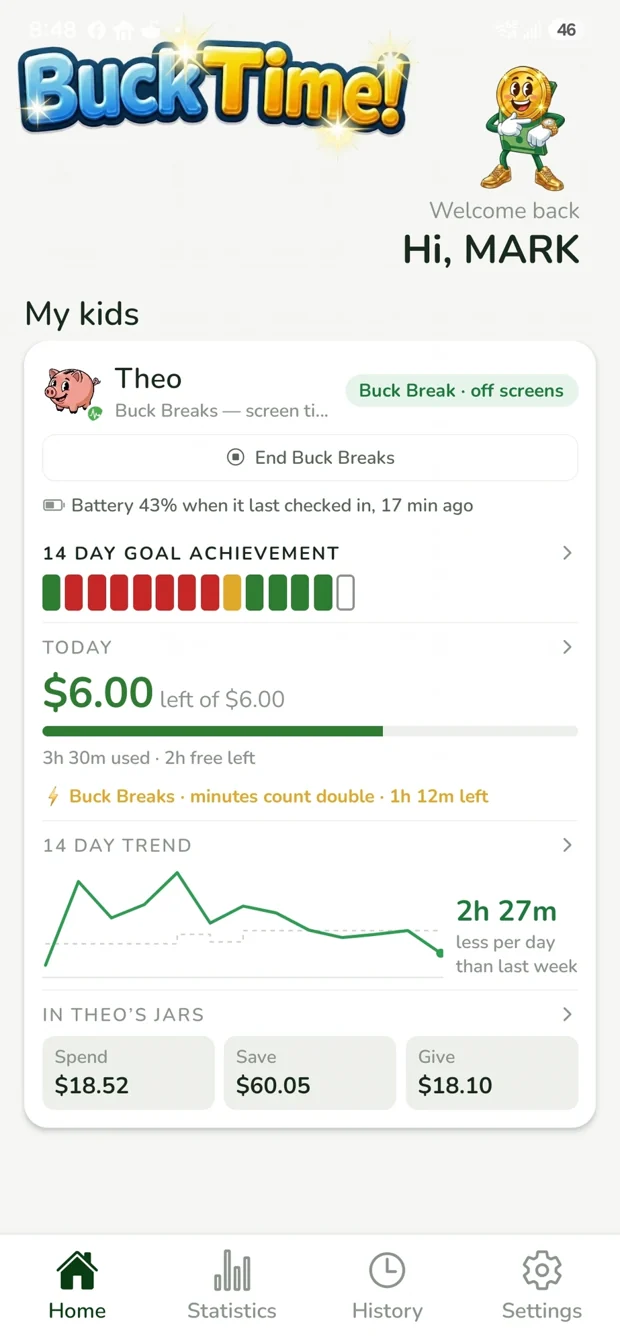
Every extra minute on a counted app costs the same small amount, and your child can see what's left at any time. When the cost of a choice is clear and immediate, it's easier to weigh it. And because the price was agreed in advance, there's nothing left to argue about at bedtime.
Rewarding the right thing
A common worry about rewards comes from research on paying children to do things they already enjoy, like reading or drawing: the payment can become the reason, and the fun fades. BuckTime! doesn't do that. The daily allowance rewards putting the screen down, not the reading, sport or play your child chooses instead. Those stay theirs, done for their own sake.
74% of US teens say being without their phone at least sometimes makes them feel happy. 72% say peaceful.
Pew Research Center, 2024Money skills that come from practice
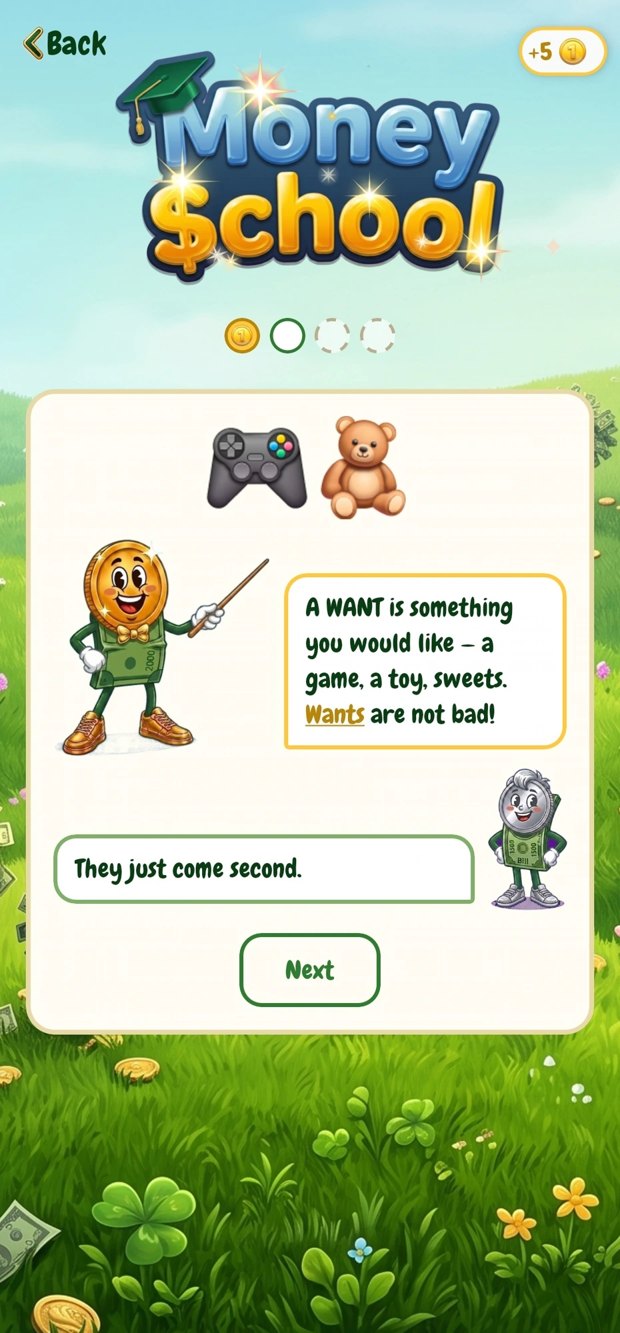
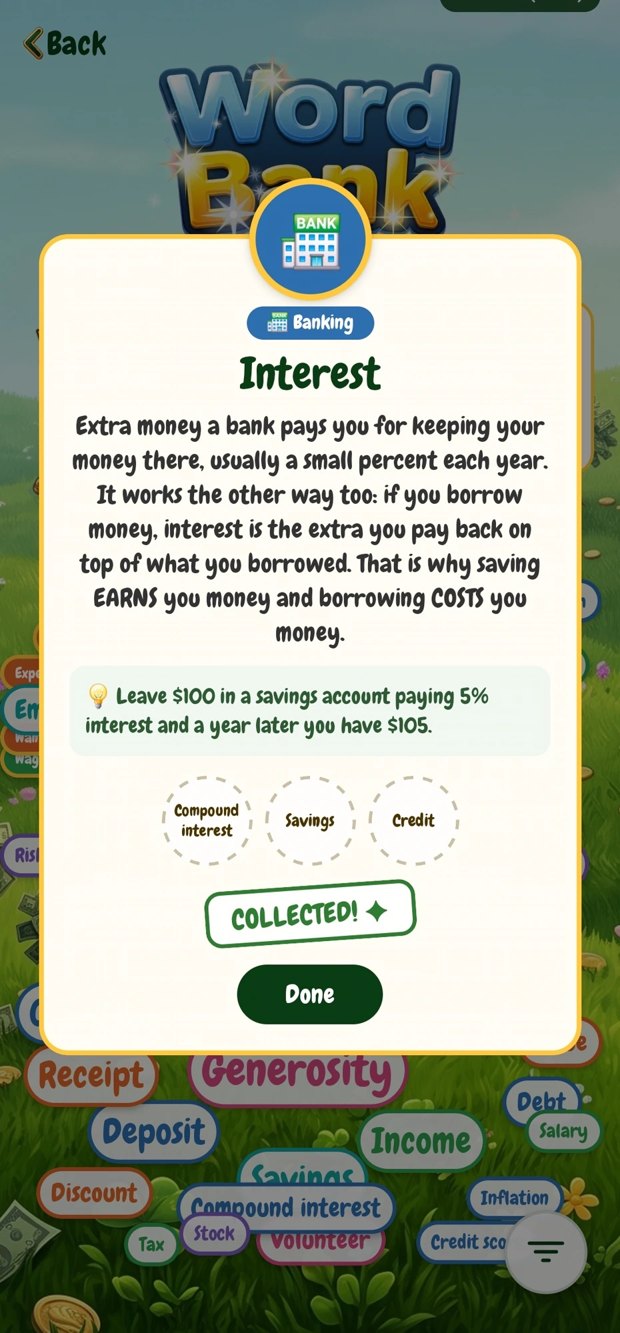
Money skills come from using money, not only hearing about it. A review for the UK's Money Advice Service found that the foundations of how children handle money start forming early, and are shaped by real experience more than by lessons. Each day your child earns, chooses, and splits what they kept between Spend, Save and Give. Money School and the Word Bank fill in the words and ideas behind it, one short lesson at a time.
96% of Canadian parents say money skills matter as much as online skills. Only 43% feel confident in their child's.
TD survey by The Harris Poll, 2025
“BuckTime! helped us achieve what seemed impossible: reducing the time our kids spend on their devices, without major meltdowns. It's been a great way for them to earn money, while showing them the benefit of making better choices. A bonus is that the app looks cool, and is very easy to use!”
“We used Buck Time as a way to link pocket money to positive outcomes and incentives… We loved the jars feature (Spend, Save and Dough-Nate) plus the huge list of charities he could choose from and help. Best of all he felt so motivated and positive about the time spent off his phone. Because it wasn't punitive (like most downtime features or parenting tactics), he felt really inspired to go and spend time reading books, playing sports with friends etc knowing that he was getting some pocket money, working towards a goal and helping other kids (his charity was Make A Wish)… Highly recommend to all parents out there!”
“Really creative concept that solves a genuine daily hassle. No more arguing!!”
Sources
- Ryan, R. M. & Deci, E. L. (2000). Self-determination theory and the facilitation of intrinsic motivation, social development, and well-being. American Psychologist.
- Brehm, J. W. (1966). A Theory of Psychological Reactance. Academic Press.
- Kahneman, D. & Tversky, A. (1979). Prospect theory: An analysis of decision under risk. Econometrica.
- Whitebread, D. & Bingham, S. (2013). Habit formation and learning in young children. Money Advice Service.
- Deci, E. L., Koestner, R. & Ryan, R. M. (1999). A meta-analytic review of experiments examining the effects of extrinsic rewards on intrinsic motivation. Psychological Bulletin.
- Statistics Canada (2026). School's out soon! But does summertime mean more screen time?
- MediaSmarts (2018). Digital Canadian Families.
- Pew Research Center (2024). How Teens and Parents Approach Screen Time.
- Common Sense Media (2026). The 2026 Common Sense Media Census: Tech and Media Use by Tweens and Teens.
- TD Bank Group (2025). Canadian parents cite social media as key influence and concern on kids' spending. Survey by The Harris Poll, 1,232 parents.